Tariq Qasim (2024). Killing Us Softly with Genocide, but We Are Survivors Who Thrive: A Qualitative Case Study of Yazidi Women Ages 25-40 Who Live in Nebraska. ProQuest LLC, Ed.D. Dissertation, Doane University. The 2014 genocide against the Yazidi community, perpetrated by ISIS, represents one of the most devastating humanitarian crises of the 21st century. This qualitative case study explores the lived experiences of Yazidi women, aged 25-40, who have resettled in Nebraska after surviving unspeakable atrocities, including mass killings, sexual enslavement, and forced displacement. Grounded in survivor narratives, this research examines the psychological, social, and cultural impacts of genocide on these women, highlighting their resilience and efforts to rebuild their lives while preserving their heritage. Utilizing in-depth interviews and storytelling methods, the study captures the unique perspectives of Yazidi women, emphasizing their coping mechanisms and strategies for adaptation in a new cultural and geographical context. The findings reveal profound trauma interwoven with resilience, as participants navigate the challenges of identity preservation, community rebuilding, and… [Direct]
Benkert, Volker; Bruner, Jason; Harris, Lauren McArthur; Kessner, Taylor M.; Reid, Stephanie F. (2021). Comparative Genocide Pedagogy and Survivor Testimony: Lessons from a Unit on the Holocaust and the Rwandan Genocide. History Teacher, v54 n2 p297-335 Feb. In this article, the authors detail a curriculum unit used by Ms. Brown and a second English Language Arts (ELA) teacher, Ms. Smith, with their high school students. The unit centered on a comparative genocide framework developed by the Comparative Genocide Project at Arizona State University. The framework detailed seven key themes common across genocides and was designed to extend genocide study beyond investigating single genocide events. Students analyzed survivor testimonies from the Holocaust and the Rwandan Genocide for evidence of those seven themes. They also completed a "reporting form" and a graphic organizer as part of the unit. While this article identifies aspects of the comparative genocide framework that were found beneficial for the students in this study, the authors also make clear the limitations of this study and plans for future iterations of this work…. [PDF]
Dalbo, George D. (2022). Unsettling Narratives: Teaching and Learning about Genocide in a Settler Space. ProQuest LLC, Ph.D. Dissertation, University of Minnesota. This research study examined how students and I navigated learning and teaching about genocide and mass violence in the context of a semester-long high school comparative genocide and human rights elective course at DeWitt Junior-Senior High School in rural south-central Wisconsin. Specifically, the study examined how students individually and collectively navigated the "difficult knowledge" (Pitt & Britzman, 2003) of learning about settler colonialism (Tuck & Yang, 2012), the genocide of Indigenous peoples in the United States during the nineteenth century, the legacies of genocide and mass violence at the intersections of U.S. and Indigenous societies during the twentieth and twenty-first centuries (Dunbar-Ortiz, 2014), and the enduring legacies of white supremacy and settlerness. Additionally, this study sought to understand how I, a white social studies teacher, navigated teaching about settler colonialism and the genocide of Indigenous peoples in a settler… [Direct]
Dennis, Julia; Dowling, Elizabeth M.; Gasana, John Gasasira; Kelly, Erin I.; Lerner, Richard M.; Malvese, Katelyn; Namurinda, Emmanuel; Rollman, Elise; Sim, Alistair T. R.; Tirrell, Jonathan M. (2023). 'That Is When Justice Becomes Complete.' Exemplars' Perspectives on Forgiveness as a Civic Virtue in Post-Genocide Rwanda. Journal of Moral Education, v52 n1 p67-82. Should forgiveness be considered a civic virtue that promotes peace and justice following injustice? In the aftermath of conflicts as severe as state-sponsored genocide, how can relationships be restored, communities reconciled, and justice achieved? We interviewed 15 adults in Rwanda–survivors of the 1994 genocide, nominated as exemplars for their youth-serving roles in their communities and their experiences with forgiving the traumas of the genocide–about their approaches to conflict resolution, their ideas about justice and forgiveness, and their community work. Phenomenological analysis supported considering forgiveness as a civic virtue, as exemplars described a restorative approach to conflict in which justice facilitates, and is completed by, forgiveness. Implications for education emerged from exemplars' accounts, including describing a process of conflict resolution that works toward peace and justice by means of listening, uncovering the truth, acting impartially,… [Direct]
Hilton, Laura J. (2021). Memorialization, Reconciliation, and Reflection: Teaching the Aftermaths of Genocide in Postwar Europe and Rwanda. History Teacher, v54 n2 p271-295 Feb. The aim of this article is to examine the frameworks that educators use, especially how they conclude teaching and learning about genocide, and to suggest readings and other sources for use. The narrative arc that educators establish by choosing where to begin and where to end is a powerful indicator of their course goals and teaching rationales. When selected deliberately and thoughtfully, these shape student perception of the events under discussion, often in subtle yet influential ways. While, certainly, each genocide has multiple common starting points, the choice of where to end discussions or courses is seldom discussed. How do educators and students define the "end" of a genocide? What are the implications of ending a course on the Holocaust with the liberation of camps such as Dachau or Buchenwald? How much do educators cover what happens after the genocide is over, when the widespread violence and persecution has ceased? What were the key elements involved in… [PDF]
Benkert, Volker; Bruner, Jason; Harris, Lauren McArthur; Reid, Stephanie F. (2019). Investigating Comparative Genocide Teaching in Two High School Classrooms. Theory and Research in Social Education, v47 n4 p497-525. This exploratory case study examined how two teachers used a comparative approach to teach genocide histories in a Holocaust Literature elective course. Through interviews and observations, we studied how the teachers guided students in comparing genocides as well as how they used survivor testimonies in their instruction. We found that teachers engaged in three types of comparison throughout the unit under study: defining genocide as the basis of comparison, discussing similarities and differences, and expanding students' knowledge of genocide beyond the Holocaust. The teachers set up their classrooms as safe places for learning about genocide as difficult history, yet they did not shield their students from its horrors. Additionally, they encouraged their students to take action against genocide outside of the classroom. This study adds to the limited empirical research on teaching comparative genocide and has implications for curriculum design and teacher education…. [Direct]
Laila Kadiwal (2023). Critical Feminist Resistance to the Politics of Hate in India. Globalisation, Societies and Education, v21 n5 p734-753. Genocide Watch has declared a 'Genocide Emergency' in India with serious consequences for Muslims and Dalits in India. The Hindutva ecosystem uses the figure of Muslim women as central to the politics of hate. However, Muslim women have also emerged as an important force in resisting this. In this context, this article interrogates what discourses and processes of anti-Muslim violence are being enabled by the Hindutva anti-social learning movements, and how critical-feminist social-learning movements, especially feminists from Muslim backgrounds, challenge and disrupt Hindutva politics. The article shows how critical-feminist social movements are learning, producing, and theorising new understandings of resisting the politics of hate. The article ends with reflections on the significance of this learning in subverting fascistic politics today…. [Direct]
Lawrence, Andy (2022). Weaving the Threads: Helping Year 9 to Engage Effectively with 'Other Genocides'. Teaching History, n187 p22-29 Jun. In this article, Andy Lawrence returns to arguments made in "Teaching History 153" about the importance of teaching young people about other modern genocides in addition to the Holocaust. Building on those arguments with his own rationale, Lawrence also acknowledges the constraints on curriculum time that compel all departments to make very deliberate choices about the topics included in their schemes of work. He therefore seeks to illustrate how the careful weaving of concepts and themes across Key Stage 3 can prepare students to engage with the particular contexts in which those 'other genocides' occurred. The article concludes with an explanation of a short sequence of lessons built around the concept of historical significance and drawing powerfully on survivor testimony…. [Direct]
Allgood, Ilene; Shah, Rachayita (2021). Preparing Preservice Teachers to Implement Holocaust Curriculum in Elementary Grades: A Study That Shows the Effects on Undergraduate Students' Cognitive, Reflective, Affective, and Active Domains. Critical Questions in Education, v12 n1 p20-39 Win. Recognizing the need to prepare elementary education teacher-candidates to implement state-mandated curriculum, a Genocide Studies Unit was developed. This study evaluated the effectiveness of the Unit in building preservice teachers' knowledge-base and efficacy levels with a mind toward preparing teachers to implement difficult content more effectively. Participants reported increased content knowledge about genocide studies, and expressed confidence in teaching sensitive and challenging topics in their classrooms…. [PDF]
Broom, Shaniqu√®; Nelson, Christine; Orphan, Cecilia; Sisaket, Lesley (2022). Imagining Decolonial Desires of the Public Good. International Journal of Qualitative Studies in Education (QSE), v35 n5 p456-477. Considering the legacies of exclusion, white supremacy, and genocide found within the walls of U.S. higher education, the public good construct is also embedded in exclusion, white supremacy, and genocide. The fact that existing notions of the public good remain intact and unquestioned of its origins means that the public good is not for all individuals of our society, particularly Black, Indigenous, Asian, Latinx, gender diverse, and ability diverse folks. Through a relational praxis, we engage in freewriting and Blackout poetry to share three solidarity narratives. This process and action detailed in this article come from a space that imagines the impossible — a decolonial desire for the public good…. [Direct]
Denov, Myriam; Shevell, Meaghan C. (2021). An Arts-Based Approach with Youth Born of Genocidal Rape in Rwanda: The River of Life as an Autobiographical Mapping Tool. Global Studies of Childhood, v11 n1 p21-39 Mar. Given the tragedy of war and genocide, words often cannot adequately capture the complexity of war-related experiences. Researchers are increasingly utilizing the arts to enable multiple forms of expression, as well as for its therapeutic and empowering qualities. This paper outlines the use of the "river of life," an arts-based autobiographical mapping tool, conducted with 60 youth born of rape during the genocide against Tutsi in Rwanda who continue to live with this intergenerational legacy of sexual violence. The article begins with a review of current arts-based methods and their relevance for war-affected populations and an overview of the genocide, sexual violence, and the lived realities of children born of rape. We then outline the "river of life" mapping tool, where participants drew their life histories using the metaphor of a river, addressing the ebbs and flows of their lives and the obstacles and opportunities they encountered. Developed in… [Direct]
Breed, Ananda; Uwihoreye, Chaste (2023). Sharing and Listening to Stories for Peacebuilding in Post-Genocide Rwanda. Research in Drama Education, v28 n1 p160-171. This article explores how sharing and listening to stories linked children and young people, educators, artists, civil society workers, and policymakers as part of a continuum of transitional justice processes in the aftermath of conflict Mobile Arts for Peace (MAP) initiative. We argue that sharing stories within a peace education context can potentially help to address everyday conflicts and personal and social wounds, often due to the residue of past conflicts. MAP facilitates a community of listening and/or a community of listeners through arts-based approaches that engages the individual to listen to oneself, the community to listen to the other, and the society to listen to inform everyday peacebuilding…. [Direct]
Johnson, Aaron P.; Pennington, Lisa (2018). Teaching "Other" Genocides: Exploring the Intersection of Global Education and Genocide Studies. Social Studies, v109 n5 p227-237. Holocaust education in the United States began as a grassroots movement during the 1970s. Today, more than 30 states mandate the teaching of the Holocaust; however, far less attention is given in schools to other 20th-century instances of genocide. Totten has suggested that by neglecting "other" genocides (e.g., Darfur, Rwanda, and Cambodia), these events may not be perceived as significant (when compared to the Holocaust), and moreover, students may fail to realize that genocide has occurred multiple times since 1945 and thus no longer a threat today. Given the implications surrounding Totten's assertion and the global nature of genocide and its reach, we aim to provide social studies teachers and teacher educators with a series of accessible suggestions for incorporating "other" genocides into their practice–suggestions that are aligned and situated within Hanvey's seminal conceptual frame for global education…. [Direct]
Lam, Kevin D. (2019). Asian American Youth Violence as Genocide: A Critical Appraisal and Its Pedagogical Significance. Equity & Excellence in Education, v52 n2-3 p255-270. This article provides an analysis of Asian American gang violence within the context of racialization and the legacy of imperialism. The analysis is grounded in a specific study of the Van Nuys (CA) Asian Boys gang and the particularities of Asian American gang violence in Southern California during the 1990s. Drawing from historical writings on genocide in Vietnam and the United States, Lam argues that Asian American youth violence is a form of genocide — rooted in the racialization of mostly working-class, immigrant and refugee youth. Youth violence as genocide provides a broader and more comprehensive analysis surrounding premature death. This article concludes with a discussion of the pedagogical significance and implications for the study…. [Direct]
Kerry Burch (2024). Can the Meaning of American "Exceptionalism" Be Transformed? An Inquiry into the Future of the Nation's Political Imagination. Education and Culture, v39 n2 p25-46. The paper argues that the racist underpinnings of the dominant narrative of American exceptionalism require radical exposure as a first step in turning around this discourse to serve democratic ends. As a key pedagogical element in this vision of renewal, insights from ignorance studies are employed to illustrate how teachers might integrate difficult knowledges of genocide, slavery, and imperial conquest into their respective encounters with the nation's hotly contested yet often forgotten historical legacies. Activating the nation's democratic potential requires the formation of a new civic aesthetic rooted in a psychoanalytically informed integration of truthful images of the past…. [Direct]
15 | 2541 | 22538 | 25031222
∧
 Israel has repeatedly attacked the occupied territories since the war in Gaza killing over 400 Palestinians, including over 100 children, and detaining nearly 8,000…
 By American Civil Liberties Union WASHINGTON — The House Energy and Commerce Committee announced it would be voting on a bill this Thursday that would effectively ban TikTok in the United States. This bill, which was introduced by Reps. Mike Gallagher (R-Wis.) and Rep. Raja Krishnamoorthi (D-Ill.), would violate the First Amendment rights of hundreds of millions …
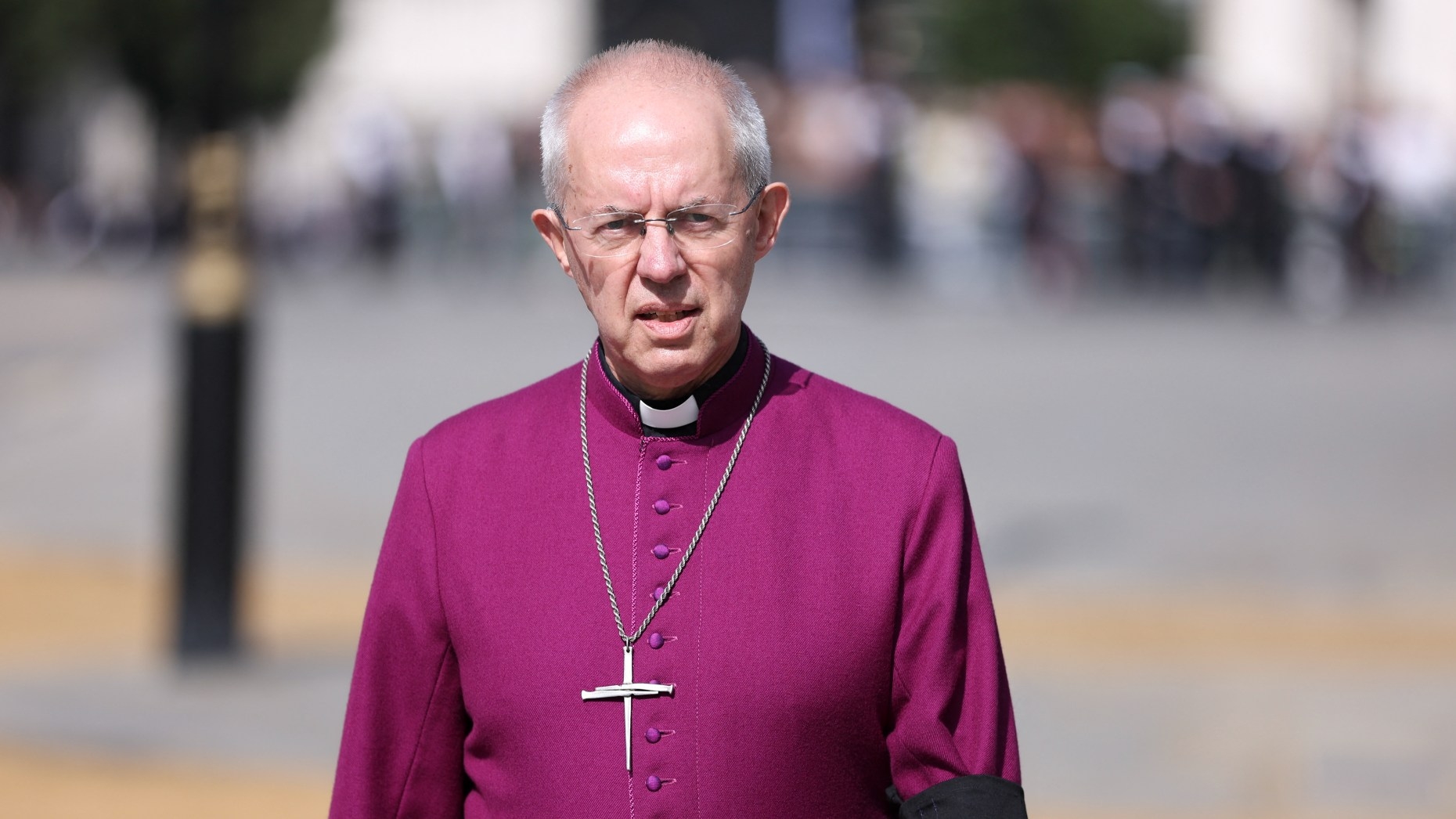 Archbishops warn UK extremism definition will target Muslim communities | Church of England leaders say overhaul of UK counter-extremism strategy threatens free speech, rights to worship and peaceful protest, and could 'vilify the wrong people' | | Justin Welby, the Archbishop of Canterbur…
 Egypt: Sisi government 'granted amnesty' to Islamic State fighters who committed war crimes in Sinai | Two rights groups warn of 'risk of impunity' for grave abuses after Egyptian army reached deals with Wilayat Sina' affiliate | | The Egyptian army in the desert in North Sinai (AFP/Egypt Army)…
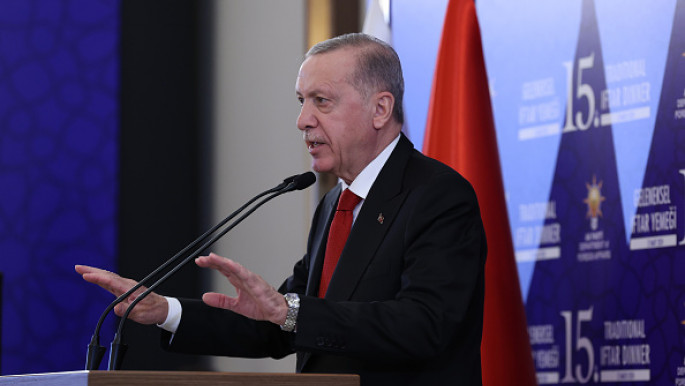 Turkish President Recep Tayyip Erdogan said on Tuesday any steps that would exacerbate the war in Ukraine and possibly spread the conflict to NATO member Turkey supports Ukraine's territorial integrity. But it also maintains cordial relations with Russia and regularly speaks with both sides in the conflict. It has provided Ukraine with military and political support but also opposes sanctions on Moscow. | Speakin…
 The United States on Tuesday imposed sanctions on four individuals in Iran for aiding the Bahrain-based, U.S.- The sanctions were imposed